W3C reference (context only, see #200)
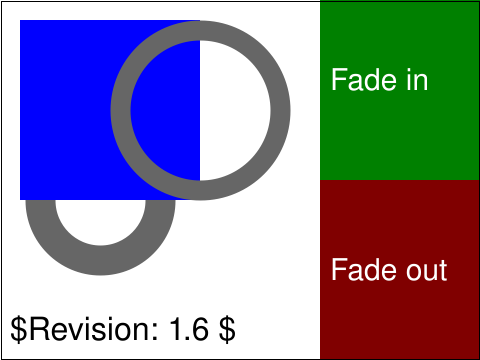
Foxglove
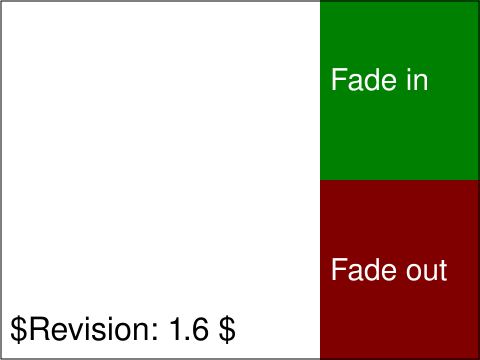
Difference
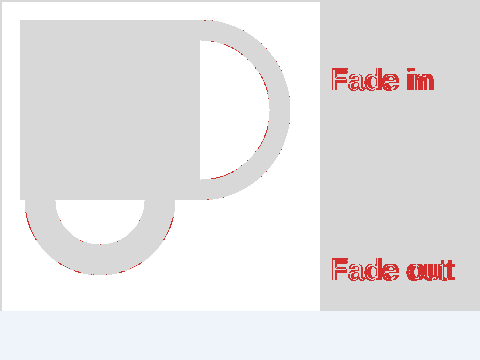
<text id="revision"> legend every test carries: it renders in a fallback font this
library cannot match, so it is excluded from the comparison entirely rather than failing every test.
The test is passed if: The first time "fade in" is clicked, a blue rectangle should smoothly fade from white to blue, and two circles should fade from white to gray, all over the course of three seconds When "fade out" is clicked, the blue rectangle should smoothly fade from blue to white, and the two circles should fade from gray to white, all over the course of three seconds. When "fade in" is clicked the second time, it should behave as the first time "fade in" was clicked but immediately followed by the "fade out" behaviour described above, so that the shapes all fade in over the course of three seconds, and then out again over the course of three seconds. The rendered picture matches the reference image, (except for possible variations in the labeling text (per CSS2 rules)) after activating the link on the fade-in button the first time and waiting three seconds for the animation to compete. The picture should remain looking the same way indefinitely, until another link is activated.
